Multiple Amaryllis Bulbs in One Pot: The Secret to a Spectacular Display
A single flowering amaryllis can look elegant on a windowsill, but a group of two to four bulbs in a wide, shallow container creates a spectacular centerpiece for a festive interior. The combination of tall flower stalks and large, colorful blooms makes a multi-bulb arrangement feel like a professionally designed floral display. However, many growers worry that planting several bulbs together will cause overcrowding, root competition, or poor flowering.
Fortunately, multiple amaryllis bulbs in one pot can thrive when the container, spacing, and growing conditions are chosen carefully. Amaryllis, more precisely known botanically as Hippeastrum, can flower beautifully in relatively compact containers. The secret is to provide enough room for each bulb without wasting space on an unnecessarily large pot.
Grouping multiple amaryllis bulbs in one pot allows you to combine complementary flower colors and create a fuller display without needing several individual containers. With thoughtful variety selection and coordinated care, you can create a dramatic arrangement in which several plants flower at approximately the same time.
The Crowding Dynamic: Competition vs. Natural Preference
Growing several amaryllis bulbs together does not automatically harm the plants. During winter forcing, mature bulbs rely heavily on energy reserves stored during the previous growing season. These reserves support the development of flower stalks and blooms, so the bulbs do not need to compete aggressively for soil nutrients at the beginning of flowering.
The goal is to create a balanced arrangement in which each bulb has access to moisture, oxygen, and nutrients while the composition remains visually full. Correct spacing also helps prevent the container from becoming unstable as the heavy flower stalks develop.

Why Amaryllis Thrives in Tight Quarters
Amaryllis bulbs generally flower well in snug containers, provided their roots have enough room to grow and the potting mix drains efficiently. In their natural habitats, Hippeastrum species grow in varied environments, including rocky or seasonally dry locations, depending on the species. Their roots do not require an enormous volume of soil to support a successful flowering cycle.
A crowded amaryllis display takes advantage of this preference for a relatively compact root environment. Instead of placing each bulb in a large individual pot, you can arrange several bulbs close enough to create a unified visual effect. This approach also limits unnecessary empty space around the bulbs and makes it easier to position the flower stalks as a group.
However, crowding should not be confused with forcing bulbs to touch. Excessive pressure between bulbs can complicate watering and increase the risk of persistent moisture around their bases. A carefully planned arrangement is more effective than simply squeezing as many bulbs as possible into one container.
The Shared Root Space Reality
When several bulbs share one container, their roots gradually occupy the same volume of potting mix. As they grow, the roots may intermingle, creating a dense network that helps anchor the plants. This can improve the overall stability of a well-proportioned arrangement, particularly when several tall flower stalks emerge close together.
Nevertheless, intertwined roots are not a substitute for a heavy, stable pot. Large amaryllis flowers can make the arrangement top-heavy, especially when several stalks develop simultaneously. Choose a container with a broad base, and rotate it periodically if the plants lean toward the light.
For additional support, follow the practical recommendations in the article ”How to Keep Your Amaryllis Upright: Tips for Tall Stems”. This guide explains how light, positioning, and suitable support can help prevent tall stalks from bending or toppling. Combining those techniques with thoughtful container selection will keep your multi-bulb arrangement attractive throughout flowering.
Step-by-Step Blueprint for a Synchronized Holiday Bowl
The most impressive group arrangements are planned before planting. Your goal is not only to fit several bulbs into one pot but also to create a composition with balanced foliage, complementary flower colors, and similar flowering times. Achieving synchronized amaryllis blooms requires particular attention to bulb size, variety selection, and the conditions provided during growth.
A successful bowl planting technique begins with a suitable container and healthy bulbs. Once the arrangement is planted, consistent warmth, appropriate watering, and adequate light help the bulbs develop without unnecessary stress.
Container Sizing and the "One-Inch" Spacing Rule
When planting multiple amaryllis, choose healthy bulbs of similar size and leave enough space between them to support root development and proper drainage. For two to four bulbs, a wide, shallow bowl measuring approximately 25–35 cm across is often a practical starting point.
Heavy ceramic or terracotta containers are especially useful because their weight helps balance tall flower stalks. Always choose a pot with drainage holes; decorative bowls without drainage should be used only as outer covers for a properly draining inner pot.
When planning amaryllis container spacing, leave approximately 2–3 cm between the sides of neighboring bulbs and a similar gap between the outer bulbs and the container wall. This spacing keeps the arrangement visually compact while allowing room for roots, watering, and air circulation around the bulb bases. Follow these planting steps:
- Prepare the container. Confirm that it has unobstructed drainage holes, then fill it with a loose, well-draining potting mix. A suitable mix should retain enough moisture for root development without remaining soggy.
- Position the bulbs. Arrange two to four healthy bulbs in the bowl, with their growing tips facing upward. Adjust their positions until the gaps look reasonably even and the composition feels balanced from different viewing angles.
- Set the planting depth. Cover the roots and lower portion of each bulb, leaving approximately the upper third exposed above the surface of the mix. Do not bury the bulb neck or growing tip.
- Water carefully. Moisten the potting mix around the roots without allowing water to collect around the bulb necks. Let excess water drain completely before returning the bowl to its display location.
The right amaryllis container spacing depends on bulb size as well as pot diameter. Larger bulbs need more room than smaller ones, so do not force four large specimens into a bowl that comfortably accommodates only two or three.
For help selecting the right container, consult ”The Ideal Pot for Amaryllis: Size, Material, and Drainage Guide”. It explains how pot dimensions, material, and drainage influence healthy root development and stable flowering.
Variety Pairing Secrets for Simultaneous Flowering
Even a perfectly planted arrangement can look uneven if its bulbs have very different flowering schedules. To encourage synchronized amaryllis blooms, choose bulbs of the same variety whenever possible. Alternatively, select cultivars with similar growth habits, comparable bulb sizes, and a documented tendency to flower within a similar period under the same conditions.
Bulb caliber matters because larger, mature bulbs generally have greater stored reserves and may produce more flower stalks. For a coordinated arrangement, use bulbs from the same size grade, such as 32/34 when that grading is available from your supplier. Matching sizes improves consistency, although it cannot guarantee that every bulb will flower on exactly the same day.
Avoid combining a particularly early-flowering miniature cultivar with a late-flowering, large double-flowered hybrid if your goal is a single synchronized display. Differences in cultivar, bulb maturity, storage history, and growing conditions can spread flowering over several weeks.
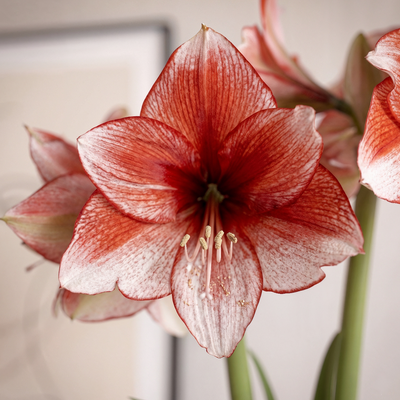
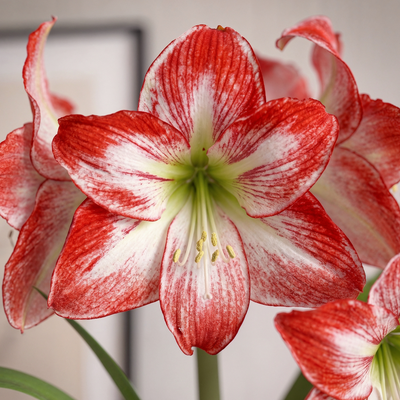
You can still create an attractive crowded amaryllis display using contrasting colors. Red and white flowers, for example, make a classic holiday combination. For the most coordinated result, choose varieties with similar expected flowering times and grow them under the same conditions. Keep in mind that even bulbs of the same cultivar may open a few days apart.
If you are considering double-flowered cultivars, our article ”Double Amaryllis Varieties: What Makes Them So Special” can help you compare their distinctive flower forms before choosing varieties for your bowl. Select bulbs for both visual harmony and similar growth characteristics rather than color alone.

Conclusion: Bold, Bountiful, and Unforgettable
Planting multiple amaryllis bulbs in one pot is a practical way to transform individual flowering bulbs into a dramatic living centerpiece. The compact arrangement can look abundant without compromising plant health, provided the bulbs have appropriate spacing, the container drains well, and the upper third of each bulb remains above the potting mix.
A carefully planned bowl planting technique also makes it easier to coordinate flower colors and choose cultivars with similar flowering schedules. While perfectly simultaneous blooms cannot be guaranteed, matching bulb sizes and growing conditions gives you a better chance of achieving a unified display.
Choose a sturdy bowl, arrange healthy bulbs with care, and provide consistent light and moisture. With these simple steps, your multiple amaryllis bulbs in one pot can create a bold, bountiful, and unforgettable seasonal display. Explore all amaryllis bulbs, presented in our online store, and find varieties for your next arrangement.
FAQ: Multi-Bulb Container Care
How Should You Water a Group Planting Without Wetting the Bulb Tops?
Use a narrow-spouted watering can to direct water into the potting mix between the bulbs and around the container's edges. Alternatively, place the pot in a shallow tray of water for a short period, allowing the mix to absorb moisture through the drainage holes, then remove it and let excess water drain. Avoid leaving the container standing in water, and keep the bulb necks dry to reduce the risk of rot.
Should You Separate the Bulbs After Flowering or Keep Them Together for Summer?
You can leave the bulbs in the same container after flowering if they have enough room and the potting mix remains well drained. Remove spent flowers, retain healthy leaves, and provide bright light so the plants can replenish their energy reserves. Feed with a suitable fertilizer according to its label during active growth. Alternatively, separate the bulbs in spring if you want to give each one an individual pot and more space for root development.
Can You Mix Contrasting Colors, Such as Red and White, in One Pot?
Yes. Red and white amaryllis make a striking holiday combination, while pink, cream, and burgundy varieties can create a softer display. For a more coordinated result, select cultivars with similar bulb sizes and expected flowering periods. Choosing varieties from the same series may help, but it does not guarantee identical growth rates. Provide all bulbs with the same light, temperature, and watering conditions to encourage a more unified display.
How Many Amaryllis Bulbs Can You Plant in One Pot?
You can usually plant two to four amaryllis bulbs in one wide, shallow container, depending on their size and the pot's diameter. Choose a sturdy pot with drainage holes and leave approximately 2–3 cm between neighboring bulbs. Keep the upper third of each bulb above the potting mix, and avoid overcrowding that restricts airflow or makes watering difficult.🎄 Tutte le amaryllis →